Texas has built its reputation on affordability, drawing a steady stream of buyers from higher-cost states. But that reputation obscures a more complicated reality for anyone actually relocating to North Texas.
The narrative that Texas is cheaper than everywhere else no longer tells the whole story. Relocation clients arriving in North Texas are having sharply divergent experiences depending on where they come from, according to Rachael Hill, Luxury Home & Relocation Specialist at Coldwell Banker Apex, Realtors. The gap between those experiences creates real challenges for agents unprepared to manage both sides.
Two Different Surprises
Hill says relocation clients fall into one of two camps, and the difference depends almost entirely on where they’re coming from.
For California transplants, the North Texas experience is often a pleasant surprise. The same budget that bought a modest home in a dense suburban market can purchase something substantially larger in Frisco or the surrounding corridor.
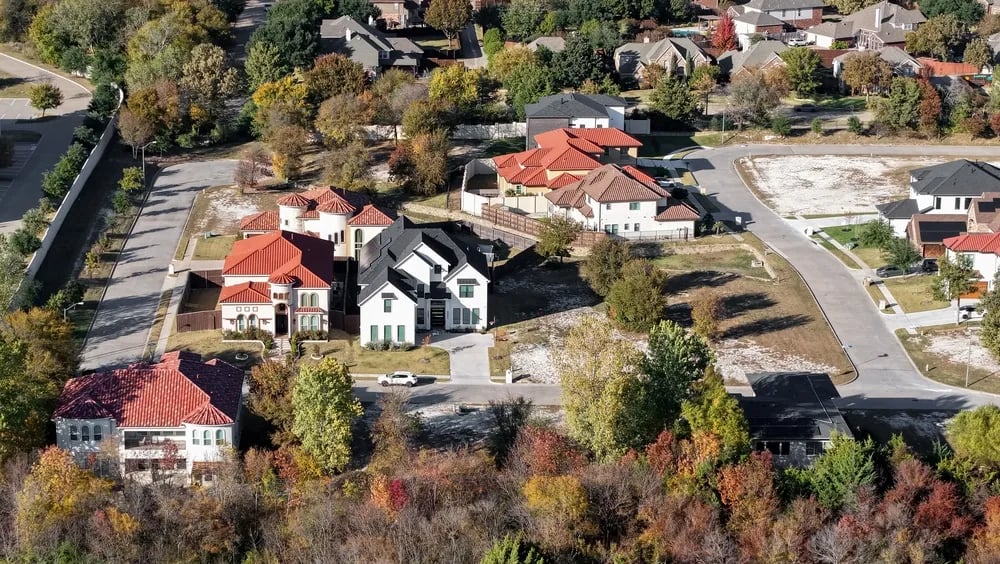
For buyers arriving from lower-cost, lower-density markets, including Ohio and other outer states, the experience runs in the opposite direction. They are paying more than they expected for homes on smaller lots, with less land, fewer trees, and a density that feels unfamiliar. “The houses are on top of each other, the lots are a lot smaller, I’m used to trees,” Hill says, paraphrasing what these clients tell her. The shock is not about absolute price but about what that price delivers relative to what they left behind.
Downsizing From Acreage
Hill describes a recent transaction that illustrates the challenge directly. A client relocating from the suburbs of Washington State was accustomed to a five-acre lot. Finding anything comparable within their budget in the areas they initially wanted proved difficult.
Hill redirected the search toward Lucas, Fairview, Flower Mound, and Argyle. These markets offer more land and tree cover than core Frisco while still falling within the North Dallas corridor. After multiple trips and an extended search, she identified a property backing up to a creek with an acre and a half of land and significant tree coverage. The clients made an offer after a video tour, beat out multiple competing offers, and flew in only after going under contract.
The transaction worked because Hill recognized that the clients’ requirements, space, trees, and land, weren’t available at their budget in the neighborhoods they initially targeted. She told them so directly. “They weren’t going to be in the areas they wanted to be at the budget with five acres,” Hill says. “It wasn’t going to happen. But if you can find a compromise, we found a compromise.”
For buyers relocating from spacious, lower-density markets, the implication is clear. The search area in North Texas often needs to expand well beyond familiar suburban names to match both lifestyle and budget.
Draws and Surprises
Hill says the fundamentals drawing relocation clients to North Texas are consistent across origin markets: a dense concentration of corporate employers, proximity to a major international airport, strong school districts, and the absence of a state income tax. She works heavily with C-suite and senior executive clients, including CFOs, CEOs, and vice presidents at large corporations, who are moving for promotions or recruitment.
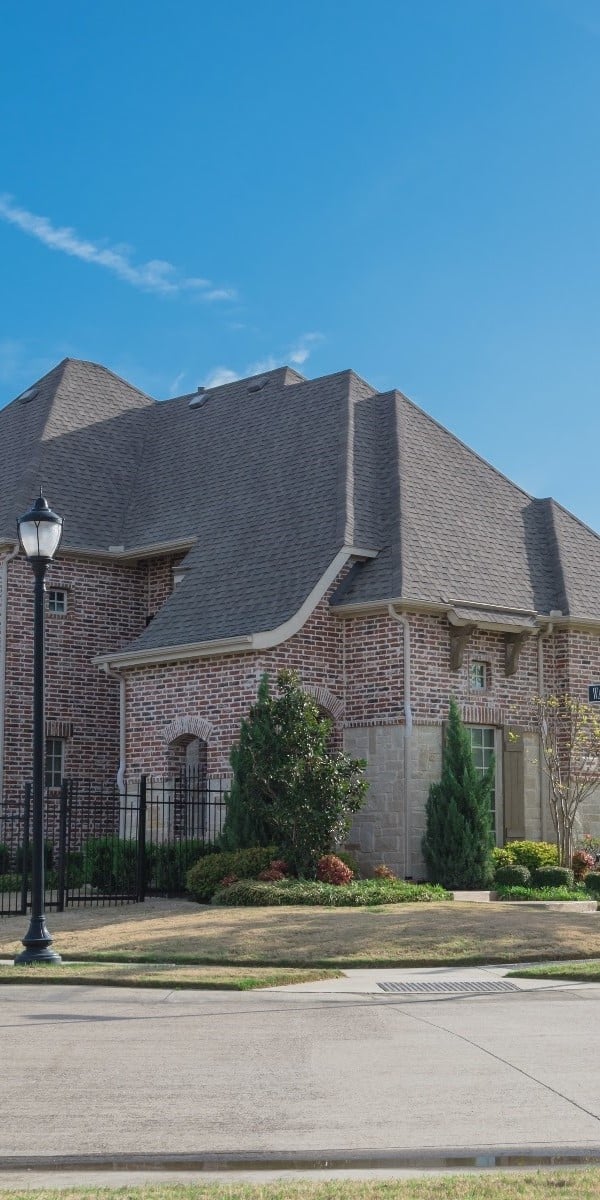
These clients arrive with clear professional motivations. What they are often less prepared for is the physical character of the market. North Texas, particularly in the Frisco corridor, is a high-density suburban environment. Lot sizes are smaller than in many comparable markets. Tree coverage is limited in newer developments.
Hill says approximately 30% of her business involves relocation, and that figure has stayed steady. She points to incoming relocations tied to AT&T, Fisher Investments, and Samsonite as evidence that corporate movement into the region will keep the relocation segment active through at least the end of next year.
A Buyer’s Market
Hill describes a market that has shifted decisively toward buyers since last spring. Inventory is higher than she has seen in the past 15 years. Sellers are offering more concessions, more repairs, and more allowances than in recent memory. Buyers, meanwhile, are submitting offers well below list price, sometimes $200,000 under, and requesting maximum closing cost assistance.
At the same time, many existing homeowners are locked in place by mortgage rates in the high twos and low threes that they are unwilling to give up. “They’re like, we need to upsize, our family’s grown, or we’re retiring, we need to downsize,” Hill says. “But the rate I have on my mortgage, when they look at downsizing or upsizing, the numbers just don’t make sense.”
For relocation buyers, this creates a window: elevated inventory and seller willingness to negotiate mean more options and better terms than a year ago. But that window exists partly because local move-up and move-down buyers remain sidelined by rate lock-in, which limits the quality of resale inventory in certain segments.
Growth Heading North
First-time buyers priced out of Frisco are moving north to Aubrey and Celina, where budgets stretch further. Celina, Hill says, is the fastest-growing city for new construction in the corridor. For new construction buyers who can afford Frisco, the Fields, a community built around the PGA, is the current center of activity. An adjacent development called Fields West and a Legacy West-style retail district are drawing additional interest.
Hill says she would not currently direct an investor toward Frisco itself, calling it a saturated market where the numbers rarely work. The northern corridor, particularly Celina, offers better entry points and growth potential for investors willing to buy new construction.
For buyers and investors evaluating North Texas, affordability alone no longer decides the outcome. What matters is which part of the corridor matches a specific budget, lifestyle, and tolerance for density, and whether an agent can identify that mismatch before the search begins rather than after it stalls.